You have published 30 blogs. You are spending money on content.. Google still has you buried on page three. That is not a writing problem. That is an authority in SEO problems. Topical authority in SEO is costing you leads, pipeline and market share every month you ignore it.
Here is what most content agencies will never tell you. Google does not rank pages. It ranks trust. Trust is not built by publishing more. Trust is built by owning a topic completely that Google has no choice but to treat your site as the authority on that topic.
SaaS brands get hit harder than anyone else here. You are operating in one of the overcrowded search verticals on the internet. Without depth even great content gets ignored.
By the end of this guide you will know what topical authority in SEO is. You will know why it is the missing piece in most SaaS SEO strategies. You will know how to build authority in SEO in a way that compounds over time. If you are scaling an enterprise SaaS SEO operation this one is especially for you.
Let us get into it.
What Is Topical Authority in SEO?
Most SaaS brands think SEO is about writing blogs and hitting the right keywords. That is half the picture. Google does not just read one page. Google reads your site. Google judges how deeply and consistently you understand a topic before deciding whether to trust you.
That is authority in SEO at its core. Topical authority in SEO is the most underused lever in any SaaS SEO strategy today.
Topical authority in SEO is the level of expertise and trust Google assigns to a website based on how consistently it covers a specific topic area. Topical authority in SEO covers not a single page but the entire content ecosystem around it.
Topical authority versus domain authority is a question that comes up constantly. Domain authority is a trust score. Topical authority is specific credibility. A newer SaaS site with domain authority can outrank an established giant if its topical coverage is deeper and tighter.
Google measures all of this through Experience, Expertise, Authoritativeness and Trustworthiness. It is Google’s scorecard for deciding which sites actually know their topic and which ones are just publishing for the sake of it.
Why SaaS Brands Cannot Afford to Ignore Topical Authority in SEO Right Now
Let us be direct. The SaaS search ranking game has fundamentally changed and most brands have not caught up yet.
AI Overviews and generative search have changed how B2B buyers find answers. Google, Perplexity and ChatGPT now respond before a single link gets clicked. They only pull from sources they consider topically authoritative. If your SaaS has topical authority in SEO you are invisible in both traditional and AI-powered search simultaneously.
SaaS is already one of the overcrowded search verticals online. Competing on product keywords alone without depth is like showing up to a knife fight with a spoon.
A SaaS brand that only blogs about its features sits in a corner talking to itself. A brand that owns the conversation around its category covering use cases, integrations, comparisons and buyer questions gets cited by Google and referenced by AI engines.
The gap between brands that understand this and brands that do not is widening every month. The more you wait the more ground you hand to a competitor who is not.
The 3-Layer Model That Powers Topical Authority in SEO
Forget theory. This is the system behind how topical authority in SEO gets built. Think of it as three layers that work together. Remove one. The whole thing weakens.
Layer 1: Pillar Pages – The Core
- A pillar page is one deeply researched page built around a core topic your SaaS genuinely owns. This is not a blog post. It is a guide, the kind of page that answers every important question on a topic in one place.
- Everything on your site links to it and out from it. It is the anchor of your content ecosystem for that topic.
Layer 2: Cluster Content – The Depth
- Cluster content is where the topical signal actually gets built. These are supporting blog posts that go on every subtopic surrounding your pillar. The tighter the interconnection between them the the signal Google receives about your topical depth.
- Google measures keyword depth by how well your cluster posts collectively cover every angle of a topic, not just the surface level.
- Thin scattered posts that cover topics do the opposite. They dilute your authority. Confuse Google about what your site actually stands for. If you want to see how SaaS link building strategies fit inside a cluster model this is a place to start.
Layer 3: Niche-Relevant Backlinks – The Validation
- This is exactly where most SaaS brands completely stall out. Content clusters alone are not enough. Google needs validation proof that other authoritative sources inside your topic space are vouching for your content.
- Generic backlinks from sites send weak topical signals and sometimes harmful ones. You need links from publications and blogs that live inside the topic space as your SaaS.
- That niche relevance is what turns a good content cluster into a genuine topical authority signal. That is the foundation of what niche-relevant SaaS link building is built to deliver.
The Mistakes That Are Quietly Destroying Your Topical Authority
If you are trying to figure out how to build authority and not seeing results chances are one of these is the reason. These are not oversights. They are ranking killers.
1. Publishing Off-Topic Content
Every unrelated blog you put out sends a signal to Google about what your site actually stands for. If your SaaS is a project management tool and you are writing about productivity tips or workplace wellness you are not helping yourself.
You are diluting the topical signal you are trying to build. Most SaaS brands treat content as a volume game. A smart SaaS content marketing strategy is not about publishing more. It is about publishing with topical focus.
2. No Internal Linking Between Cluster Posts
Disconnected content is invisible content. A poor linking structure means Google cannot see the web of connections between your posts or understand the depth of your topical coverage. If your blogs do not link to each other they’re just floating pages with no structural authority.
3. Only Building Links to Your Homepage
Your homepage does not rank for every keyword you care about. Your cluster pages do. If all your link building effort goes to the door and nothing goes to your content those pages will plateau no matter how good they are.
4. Volume Over Depth
Five researched well-structured posts will outperform fifty thin ones every single time. Google does not reward output. It rewards completeness. A post that fully answers a topic beats ten posts that each answer a fraction of it.
5. No Competitor Gap Analysis
If you do not know which topics your top competitors rank for that you do not you are building your content strategy completely blind. You are guessing while they are compounding.
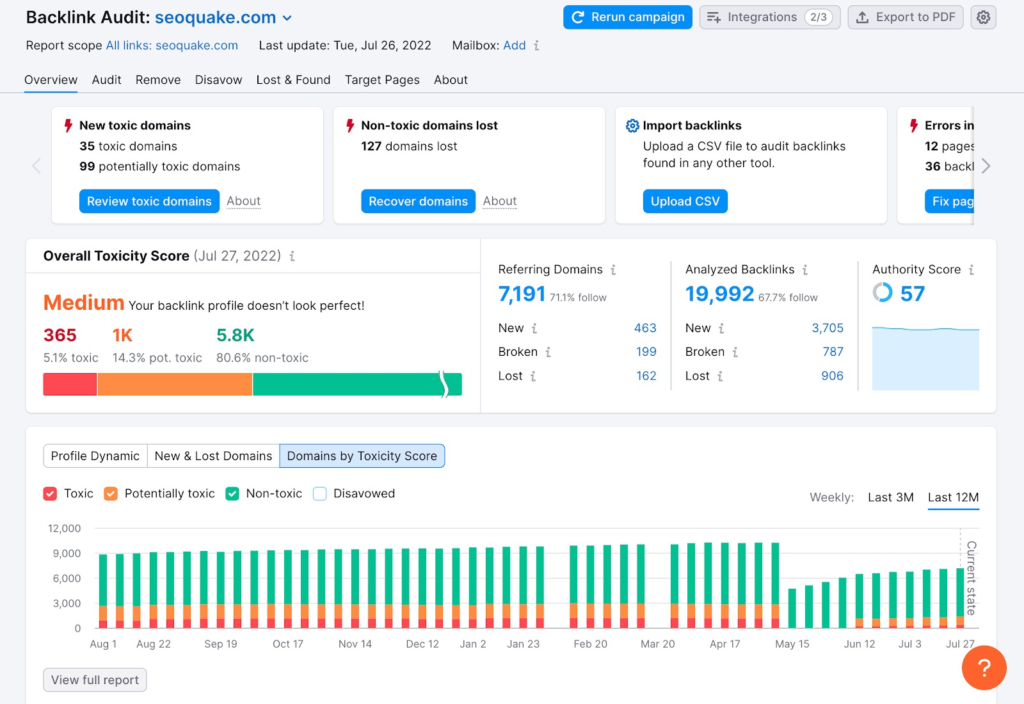
“At UpliftSaaS competitor backlink gap analysis is the step before a single link is built because that is where real ranking opportunities hide.”
Building Topical Authority in SEO for Your SaaS Brand
Now we get to the stuff. No unnecessary talk, what you need to know. Here is how you build authority in SEO using semantic SEO for SaaS as your base.
Step 1: Define Your Core Topic Clusters
- Choose three to five topics that your SaaS brand’s really about. If you have a project management SaaS you should focus on task management, team productivity and async work. Do not waste time on lifestyle content or news that is not related to your industry.
- When you focus on a thing you become an authority faster. If you try to do much it will not work.
Step 2: Build Pillar and Cluster Architecture
- Make one page for each of your main topics. Then create eight to twelve posts that link to each other and go into detail on subtopics.
- Building content clusters for SaaS is not a way to improve your SEO. It is how Google learns to trust your brand as an expert on a topic.
- Each post should link back to the page and connect to at least one or two other related posts. This network of connections shows Google that you have an understanding of the topic.
Step 3: Write for Semantic SEO, Not Just Keywords
- Google now looks at the meaning and context of your content, not the keywords you use. Use terms that answer the questions your customers are asking and write content that covers the topic, not just the headline.
- Before you write a post check the “People Ask” section on Google. Those questions are what Google uses to find answers. This is also where getting links from reputable sites in your industry can help support your content and increase your authority.
Step 4: Earn Niche-Relevant Backlinks, Not Just Any Backlinks
- If you create content clusters but do not get external validation you will not see much improvement. A link from a SaaS publication is more valuable than one from a generic tech directory or unrelated blog.
- Start by reaching out to publications in your topic area. If you need help getting started you can use SaaS outreach templates to find sites that’re relevant to your niche.
Step 5: Keep Expanding the Cluster Consistently
- Building authority in SEO is not a one-time thing. It is something you need to work on over time. If you stop publishing content in your niche you will lose ground to your competitors who do not. Consistency is key here.
How UpliftSaaS Helps You Build Topical Authority Through Relevant Links
UpliftSaaS works with SaaS brands. Every link we place is on a site that’s relevant to the SaaS ecosystem, which directly helps increase your topical authority in SEO.
The process starts with analyzing your competitors, identifying topic clusters and ending with high-authority placements that support your content clusters, in SaaS and B2B publications.
The numbers do not lie. AccessiBe went from 20K to 300K in traffic. Elementor went from 200K to 450K. Snov.io went from 80K to 200K. All of these results came from links that helped show the website was an expert in its field across all of its content, not the homepage.
If your SaaS company is creating content but your competitors are still showing up higher in search results the problem is usually that you do not have authority in your niche. This is what UpliftSaaS was created to help with.
If that sounds like the gap you are sitting in right now, it is worth a conversation. Talk to UpliftSaaS and let us look at where your topical authority actually stands.
Topical Authority in SEO FAQs
1. What is topical authority in SEO?
Topical authority in SEO is when Google thinks a website is credible because it has a lot of content about a topic. This happens when a website has a lot of content, publishes new content regularly and has links from other websites that are about the same topic.
2. Why is topical authority in SEO for SaaS companies?
The SaaS industry is very competitive when it comes to search results. Without authority in SEO even well-written content will get buried and your competitors will get all the clicks.
3. What is the difference between authority and domain authority?
Domain authority is like a score for your whole website. Topical authority is when you are an expert in a topic. A SaaS website with domain authority can still show up higher in search results than a more established competitor if it has more content about a specific topic.
4. How do links from websites help with topical authority in SEO?
When you get links from websites that’re about the same topic as yours it sends a strong signal to Google that your website is an expert in that topic. Links from websites that are not related to your topic do not help much. This is why UpliftSaaS only gets links from websites that’re specifically about the SaaS industry.
5. Can a new SaaS company build authority and show up higher in search results than its competitors?
Yes it is possible. It happens more often than you think. When you create a group of content that’s all about the same topic and get links from other websites that are about the same topic you can show up higher in search results than older competitors that do not have as much content about that topic. UpliftSaaS helped AccessiBe go from 20K to 300K in traffic by doing exactly this.
6. How does topical authority in SEO affect search results that use intelligence?
When Google uses intelligence to answer questions it only uses answers from websites that it thinks are experts in that topic. If your SaaS company does not have topical authority in SEO you will not show up in those answers and that is where more and more business buyers are starting their research.
7. What is the fastest way to build authority for a SaaS company?
The fastest way to build authority for a SaaS company is to focus on three things at the same time: creating in-depth content around a specific topic, earning backlinks from websites within your niche, and identifying content or keyword gaps where competitors are underperforming. When these efforts work together, your SaaS brand can build topical authority faster and improve search visibility over time. UpliftSaaS helps SaaS companies implement this strategy from the start to accelerate results.